
LoRAD Pro -
LoRaWAN Enabled Radon Sensor
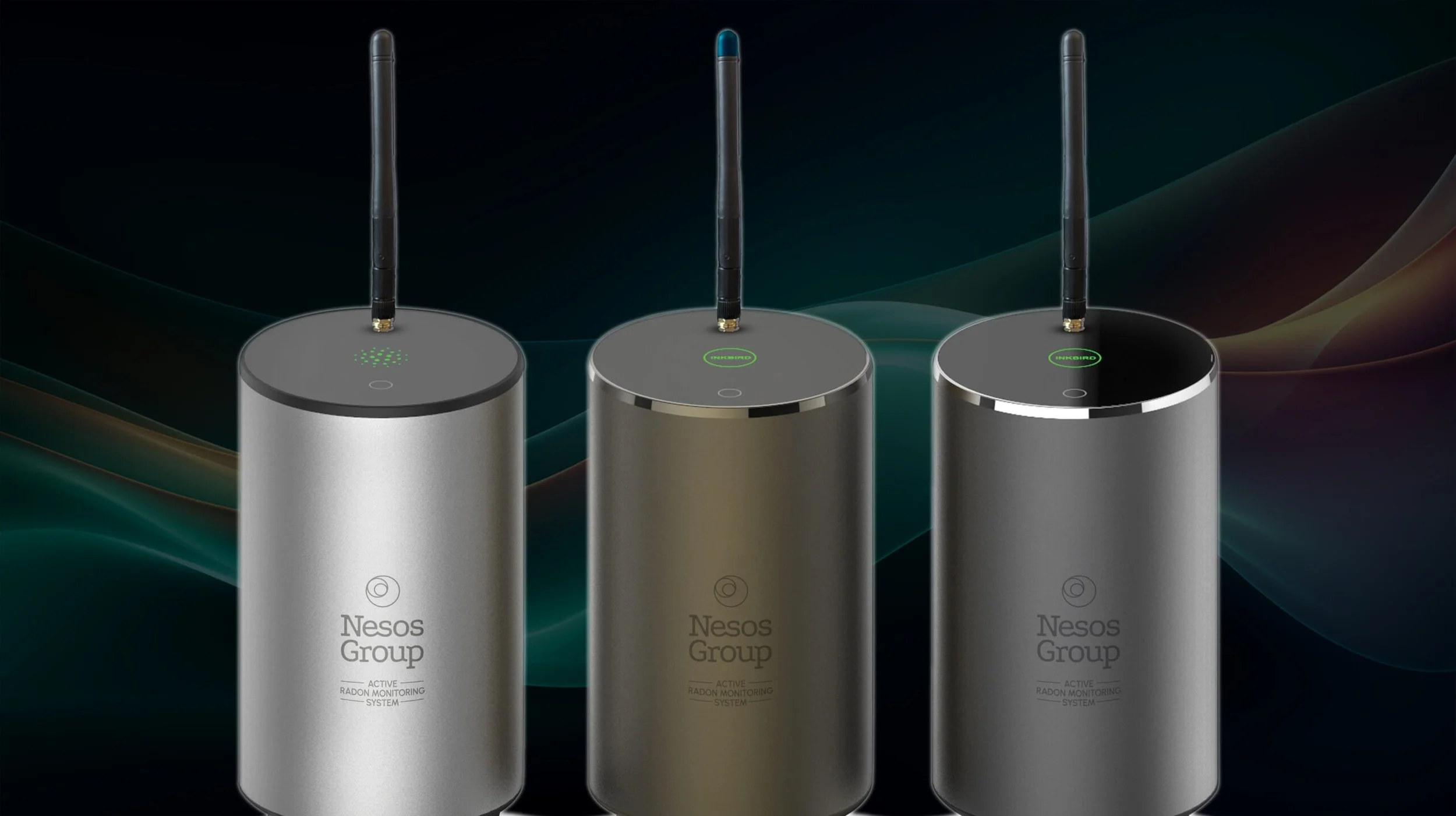
Professional real-time radon monitoring for building safety. Advanced IoT technology meets environmental protection.
Why Radon Monitoring Matters
Radon is an invisible, odourless radioactive gas that poses serious health risks:
Cancer
Second leading cause of lung cancer globally after smoking
Natural
Naturally occurring from uranium decay in soil and rocks
Ubiquitous
Affects offices, schools, homes, and industrial facilities worldwide
Avoidable
Accumulates to dangerous levels in poorly ventilated buildings
The Most Accurate IoT-Based Radon Detection Solution
Professional LoRaWAN Radon Sensor – Real-Time Monitoring for Building Safety
Experience unparalleled accuracy with our professional-grade LoRaWAN Radon Sensor – featuring industry-leading sensitivity that’s 15 times more accurate than ANSI/AARST minimum standards. Our LoRAD Pro Radon Sensor delivers enterprise-grade radon detection with results in minutes, not days.
Why Our Sensor Leads the Market
Radon is an invisible, odourless radioactive gas that poses serious health risks:
Complete Solution

Hardware, carrier grade connectivity, software, and support from one supplier
Integration assistance for complex deployments
Training for your facilities team
Ongoing calibration and maintenance programmes
Flexibility

Hardware-only: Sensors work with any existing LoRaWAN network for maximum customer flexibility.
Complete solution: Supply sensors plus network infrastructure as a turnkey system.
Network-agnostic: Compatible with all LoRaWAN providers – customers can switch without hardware changes.
Scalable: Start hardware-only and add services later, or begin with full solution.
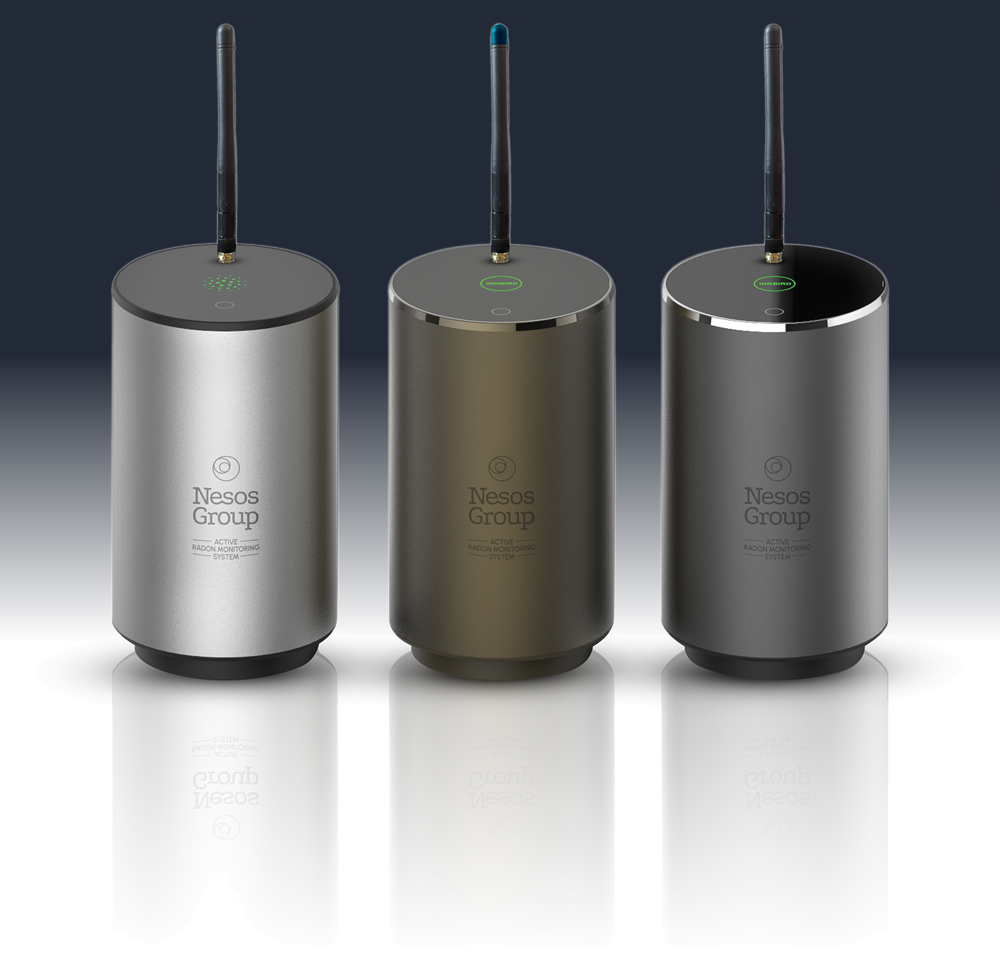
Premium Build Quality

Modern aluminium alloy body
Genuine “metal finish” design
Professional appearance for any environment
Exclusive Global Distribution

Direct manufacturer relationship ensures best pricing
Priority access to latest firmware updates
Customisation options for large deployments
Dedicated technical support channel
FAST RESULTS – Minutes Not Days
Unlike traditional radon monitors that take 48-72 hours for initial readings, our sensor delivers:
First reading in just 10 minutes
Highly reliable results within 60 minutes
No more waiting days for critical safety data
Continuous monitoring: 10-minute updates keep you constantly informed
TRUE IoT INTEGRATION

Advanced LoRaWAN wireless technology
Seamless cloud platform integration
Real-time remote monitoring from anywhere
Proven Technology

Pulsed ion chamber technology for superior accuracy
Aluminium construction for durability
LoRaWAN connectivity for reliable, long-range communication
Cloud platform designed for professional use
Highly Accurate

30 counts per hour per pCi/L sensitivity
15x more sensitive than ANSI/AARST minimum standards
Professional-grade accuracy you can trust
Detect even low levels of radon early
Make precise ventilation adjustments
Ensure complete regulatory compliance
Protect building occupants with confidence
Applications & Use Cases
Commercial Buildings
Commercial Building Requirements: Radon sensors help commercial property owners meet duty of care obligations under health and safety legislation, particularly in offices, retail spaces, and hospitality venues in radon-affected areas. Buildings with basement levels, ground floor premises, or those on certain geological formations require monitoring to protect employees, customers, and tenants. Commercial landlords use sensors to demonstrate compliance with workplace safety regulations and maintain property values in radon-prone regions.
Operational Benefits: Continuous monitoring systems integrate with building management platforms to automatically adjust ventilation when radon levels rise, maintaining safe environments without manual intervention. Sensors provide real-time data for informed decisions about space usage, particularly for below-ground areas like storage facilities, car parks, and retail units. Multi-zone monitoring tracks levels across different areas, ensuring consistent safety standards throughout premises.

Business Continuity: Commercial-grade sensors offer predictive maintenance, alerting managers before levels reach action thresholds, preventing business disruptions from emergency remediation. Cloud-based monitoring provides detailed reporting for insurance, tenant communications, and regulatory inspections. Data helps owners budget for remediation and demonstrate proactive safety management to tenants, potentially reducing liability risks and maintaining competitive advantage in the commercial property market.
Residential & Social
Home Use: Radon sensors continuously monitor gas levels in homes, particularly in basements where concentrations are highest. These devices measure radon in becquerels per cubic metre (Bq/m³), alerting homeowners when levels exceed the UK action level of 200 Bq/m³. Real-time data helps determine if mitigation systems like positive pressurisation or improved ventilation are needed. Modern sensors connect to smartphone apps for remote monitoring and historical tracking, helping residents understand how activities like opening windows affect radon levels. Multi-room monitoring identifies high-concentration areas, whilst smart home integration enables automated ventilation responses when levels spike.
Social Housing Applications: Housing authorities deploy sensors across multiple units to ensure tenant safety and regulatory compliance. Large-scale networks enable data-driven maintenance scheduling and budget allocation for mitigation projects. Continuous monitoring provides documentation for inspections and helps identify construction characteristics contributing to elevated levels, informing future designs. In sheltered housing, sensors address vulnerabilities of residents who spend most time indoors. Wireless networks reduce installation costs compared to traditional testing. Aggregated data reveals neighbourhood patterns, supporting targeted public health interventions. Seasonal monitoring helps managers prepare for winter months when reduced ventilation causes levels to rise, enabling preventive measures like heating adjustments or tenant notifications about proper ventilation practices.
Regulatory
Regulatory Framework: Radon sensors help organisations meet various regulatory requirements, including Health and Safety Executive (HSE) guidelines that recommend action when levels exceed 200 Bq/m³, local authority regulations that may mandate testing in certain buildings, and workplace safety standards under the Health and Safety at Work Act. Many councils require periodic testing in schools, nurseries, and public buildings, whilst some areas have specific requirements for property transactions and rental properties in radon-affected areas.
Compliance Benefits: Continuous monitoring sensors provide documented evidence of radon levels over time, creating an audit trail that demonstrates due diligence to regulatory authorities. Unlike short-term test kits that provide snapshots, sensors offer ongoing compliance verification and can immediately alert facility managers when levels approach or exceed regulatory thresholds. This real-time capability enables prompt corrective action before breaches occur.
Documentation and Reporting: Sensors automatically log data that can be easily compiled into compliance reports, reducing administrative burden and human error. Many devices integrate with cloud platforms that generate regulatory-compliant reports showing historical trends, peak exposures, and remediation effectiveness. This continuous documentation helps organisations demonstrate ongoing compliance rather than just point-in-time testing, which is particularly valuable during inspections or legal proceedings.
The proactive monitoring approach shifts organisations from reactive compliance to preventive management, reducing liability risks whilst ensuring safer environments for occupants.
Industrial & Specialised
Advanced Monitoring Capabilities: Industrial-grade sensors feature explosion-proof housings for hazardous environments, integration with building management systems for automated ventilation control, and data logging meeting stringent regulatory requirements. Systems include remote monitoring for tracking multiple sites from central locations, with immediate alerts for threshold breaches enabling rapid response to protect workers and maintain operational compliance.
Industrial Applications: Radon sensors are essential in mining, quarrying, and construction where workers encounter elevated levels in underground or confined spaces. Manufacturing facilities on radon-prone geology require continuous monitoring to ensure worker safety under Control of Substances Hazardous to Health (COSHH) regulations. Nuclear facilities and research establishments use sophisticated detection systems to distinguish between natural background radiation and operational sources, ensuring accurate environmental monitoring.
Social Housing Applications: Housing authorities deploy sensors across multiple units to ensure tenant safety and regulatory compliance. Large-scale networks enable data-driven maintenance scheduling and budget allocation for mitigation projects. Continuous monitoring provides documentation for inspections and helps identify construction characteristics contributing to elevated levels, informing future designs. In sheltered housing, sensors address vulnerabilities of residents who spend most time indoors. Wireless networks reduce installation costs compared to traditional testing. Aggregated data reveals neighbourhood patterns, supporting targeted public health interventions. Seasonal monitoring helps managers prepare for winter months when reduced ventilation causes levels to rise, enabling preventive measures like heating adjustments or tenant notifications about proper ventilation practices.

Technical Specifications
Radon Sensor Performance
Sensor Type: Pulsed ion chamber
First Reliable Data: < 1 hour
Data Update Interval: 10-minute updates (1-hour moving average)
Radon Count Sensitivity: 30 CPH (Count Per Hour) per 1 pCi/L
Measurement Range: 0.2 ~ 99.9 pCi/L (1 ~ 3700 Bq/m³)
Accuracy/Precision: < 10% at 10 pCi/L (370 Bq/m³) after 10 hours
Connectivity & Features
Network Protocol: LoRaWAN
Power Consumption: DC 12V ± 0.1V, 65mA (12V DC adapter included)
Physical Specifications
Dimensions: Φ80mm × 140mm
Weight: 380g
Operating Range: 0°C ~ 40°C, RH < 80%
Packaging: 100 × 100 × 190mm colour box, 450g
Testing Conditions: All data measured at 25°C ± 2°C

Frequently Asked Questions
-
Our Radon sensor features 30 counts per hour per pCi/L sensitivity, compared to the ANSI/AARST minimum standard of 2 CPH. This exceptional sensitivity enables detection of even minor radon fluctuations.
-
Yes! You’ll see your first reading in 10 minutes, with highly reliable data within 60 minutes. Full accuracy of <10% is achieved after 10 hours of continuous monitoring.
-
The premium aluminium alloy body provides durability, excellent heat dissipation, and a professional appearance suitable for any commercial environment.
-
It is not advised to move the sensor frequently as it is a sensitive scientific monitoring instrument that requires stable placement for accurate readings. Additionally, due to the cyclical nature of radon (which varies by season, weather, and building usage patterns), it is highly recommended that a sensor remain in situ for at least 12 months to effectively measure a building’s complete radon profile and identify all fluctuation patterns.
-
Typically 200-500 m² depending on room layout and ventilation. Our experts can help design optimal sensor placement for your building, however for most accurate results we recommend placing one sensor for every 50 m².
-
You can use an existing LoRaWAN network if available, or we can help you deploy a private network. A single, low cost gateway can cover an entire building or campus.
-
You can easily monitor all your sensor readings through our intuitive Web app at https://radonapp.nesosgroup.com/dashboard. The dashboard provides real-time radon levels, historical trends, multi-sensor overview, and customizable alerts – all accessible from any device with an internet connection.
-
Yes! We offer seamless integration with your existing infrastructure via native support for AWS SNS, Azure Service Bus (Microsoft Fabric), and Google Cloud Pub/Sub. For custom applications and IoT platforms, we also provide MQTT connectivity, enabling you to stream real-time radon data directly into your building management, analytics, or monitoring systems.

Enquire
Please complete the form below with your requirements and one of our consultants will be in touch to assist you further